
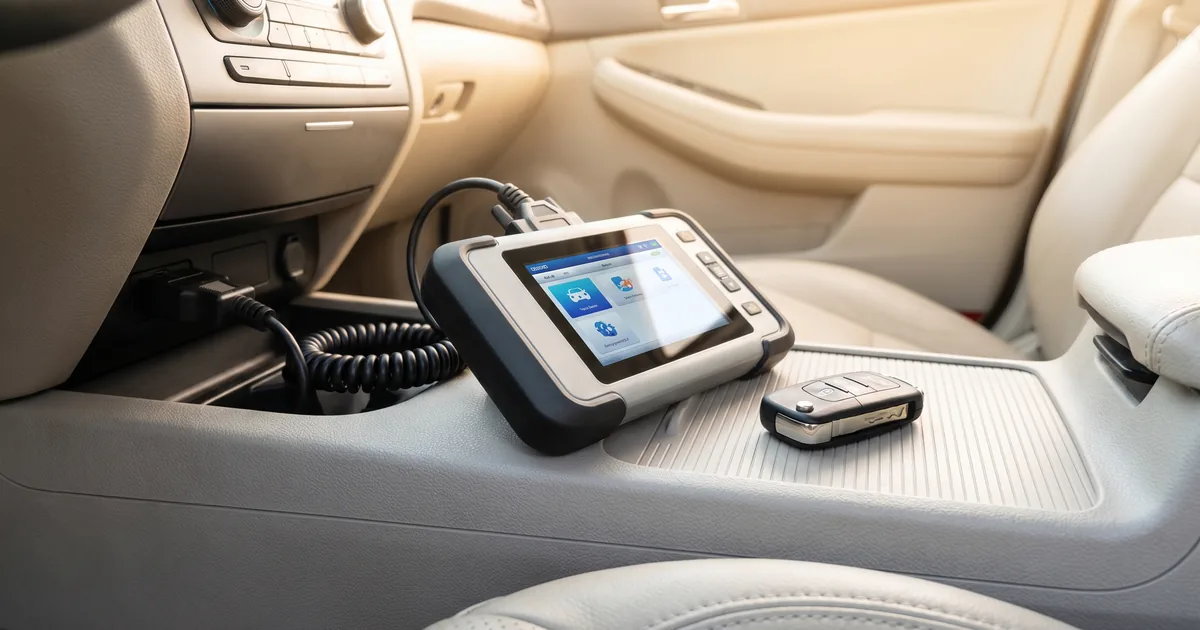
Almost every car built since the late 1990s carries an immobiliser - an electronic guard that only lets the engine start if it recognises an authorised key. Car key programming (also called key coding) is the process of teaching that immobiliser to trust a new key. Without it, a freshly cut key will turn in the lock and do absolutely nothing when you try to start the car.
What "car key programming" actually means
A modern car key does two separate jobs. The metal blade is a mechanical key that turns the door and ignition. Hidden in the plastic head is an electronic chip - a transponder - that talks to the car. When you turn the key or press the start button, the immobiliser sends out a challenge; the chip answers with a security code; and only if the code matches does the car release the fuel and ignition systems.
Programming is the step that writes the correct code to the chip and registers it in the car's memory. It is a software job done with diagnostic equipment, not something a key cutter alone can do. This is why a supermarket kiosk can copy your front-door key in two minutes but cannot help with a car key.
Transponder keys vs proximity smart keys
The programming method depends on what kind of key your car uses. There are three broad families on UK roads:
Transponder keys (roughly 1998-2010)
A blade key with a chip in the head and no remote buttons. You physically put the key in the ignition and turn it. These are the quickest to programme.
Remote-locking keys (roughly 2005-2018)
A blade key with buttons for central locking, plus the transponder chip. Programming covers both the immobiliser pairing and the remote-locking functions.
Proximity smart keys (roughly 2015-present)
Keyless entry and push-button start. The car detects the key in your pocket, so there is often no blade in the ignition at all (just a hidden emergency blade for the door). These use rolling encryption and need an up-to-date diagnostic platform to programme.
How programming works, step by step
Whether it is a spare or an all-keys-lost job, the process at the kerbside follows the same shape:
- Identify the key and immobiliser. Make, model and year tell the locksmith which chip, blade profile and security system are involved.
- Cut the mechanical blade. From the existing key, the door lock, or the VIN.
- Read the immobiliser data. Dealer-grade equipment connects to the OBD port (the diagnostic socket usually under the dashboard) to read the security data the car uses to recognise a key.
- Pair the new key. The chip or smart module is written with the right code and registered with the immobiliser.
- Test and wipe missing keys. Everything is tested; any unaccounted-for keys are erased so they can no longer start the car.
Can you program a car key yourself?
This is the question behind most "car key programming kit" searches, so here is the honest answer. On a small number of older models you can pair a second key using an on-board sequence (turning an existing key in the ignition a set number of times, for example). But you still need a correctly cut blank with the right transponder, and the method only works when you already have one working key.
For most cars from the mid-2000s onward - and for every all-keys-lost situation - DIY falls down for three reasons:
- Security data is locked away. All-keys-lost programming needs the car's PIN or security code, read from the immobiliser with professional equipment. Cheap kits cannot extract it.
- The blanks have to be cut and chipped correctly. A wrong transponder or an uncut blade gets you nowhere.
- A mistake can lock the system. Some immobilisers lock out after failed attempts, turning a routine job into an expensive recovery.
For a one-off replacement, a mobile auto locksmith almost always works out cheaper and quicker than buying tooling you will use once. If you have lost every key, see the dedicated all-keys-lost guide.
"Car key coding near me" - what to expect
Key coding and key programming are the same job under two names. A mobile auto locksmith comes to wherever the car is parked - your driveway, a work car park, the roadside - and completes the whole thing on the spot. There is no need to tow the car anywhere, which is the single biggest advantage over the main dealer when no working key exists.
Car key programming costs in London (2026)
Realistic ranges from an independent London auto locksmith, with a fixed price quoted up front and no separate call-out fee.
| Job | Typical price | What changes it |
|---|---|---|
| Spare transponder key (one working key present) | £90-£180 | Make, model, remote-locking version |
| Remote key programming (key supplied) | £60-£120 | Whether the blade also needs cutting |
| Proximity smart key (spare) | £150-£350 | Latest keyless systems at the higher end |
| All keys lost - transponder car | £200-£400 | Immobiliser generation, year |
| All keys lost - proximity smart key | £300-£550 | Premium and newest models at the top end |
For how these figures sit alongside the rest of the trade, see the full London locksmith pricing guide.
Frequently asked questions
What is car key programming?
It is the process of registering a key's electronic chip with the car's immobiliser so the engine will start. Almost every car built since the late 1990s needs this - cutting a key to fit the lock is not enough on its own.
The job is done with diagnostic equipment connected to the car, not at a key-cutting machine.
Can I program a car key myself?
On some older models you can pair a spare using an on-board sequence, but you still need a correctly cut and chipped blank, and it only works when you already have a working key.
For most cars from the mid-2000s on, and for any all-keys-lost job, programming needs the car's security data read through the OBD port - which DIY kits generally cannot do.
Is "car key coding" the same as programming?
Yes. Key coding and key programming describe the same task - writing the correct security code to the key and registering it with the car. Searching for either will find the same mobile locksmith service.
How long does programming take?
Pairing a spare to a car that already has a working key is usually 20-40 minutes. An all-keys-lost job is typically 45-90 minutes because the immobiliser has to be read from scratch.
Need a key cut and programmed in London?
Bullard Locks is a mobile auto locksmith covering North and Central London. Keys are cut and programmed on-site for all makes and models, with a fixed price agreed before any work starts and no call-out fee. Whether you need a spare coded or every key replaced from scratch, the whole job is done where your car is parked.